Niche Research · Cixur Team · October 31, 2026 · 6 min read
How to Read a Niche Score: Demand, Competition, and Opportunity Explained
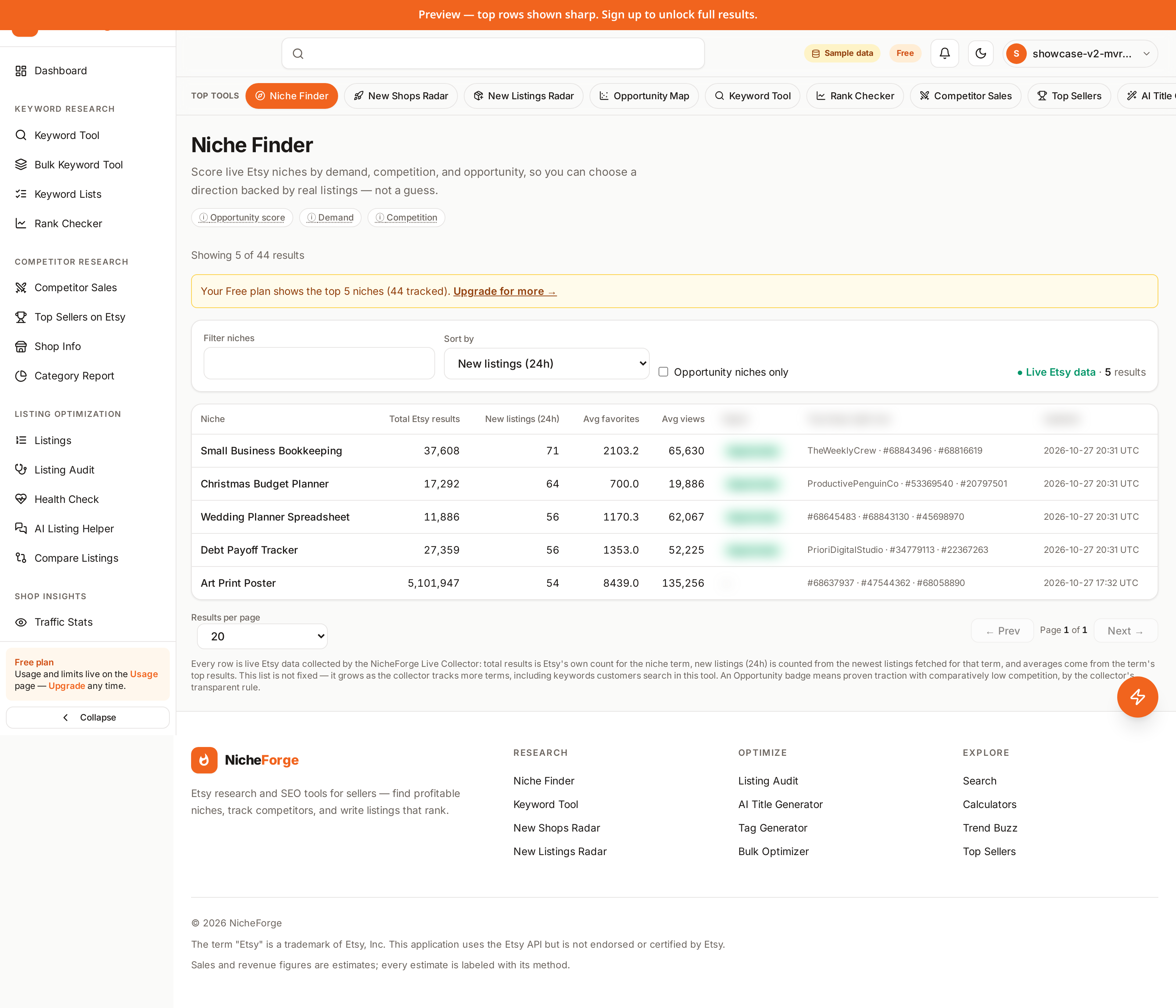
A niche score looks simple: three numbers for demand, competition, and opportunity. Behind those numbers sits a judgment about a market, and reading them well means knowing what each number measures, what it ignores, and how the three fit together. This guide explains the scores in plain language, so you can use them to compare niches without over trusting any single number.
The Niche Finder scores niches from collected live listings. Demand reflects buyer pull, competition reflects seller push, and opportunity reflects the gap between them. The sections below take each score in turn, then show how to read them as a set.
What a niche score is (and is not)
A niche score is a summary of evidence, not a measurement of the future. It compresses many listings, favorites, reviews, and prices into three numbers so you can compare niches side by side. That compression is its value and its limit: it helps you rank candidates, but it cannot see your costs, your skills, or your photography. Treat a score as the start of a decision, never as the decision itself.
Scores also move. As new listings appear, favorites accumulate, and seasons change, the same niche can score differently from one month to the next. Re-check a shortlisted niche before you commit, and re-check a niche you are already in on a regular rhythm. A score is a snapshot of a living market, not a permanent grade.
Demand: the pull of buyers
Demand answers one question: are buyers actively looking and responding in this niche? The evidence includes favorites gathering steadily, reviews arriving at a healthy pace, new listings appearing because sellers believe buyers are there, and search interest around the occasions and problems the niche serves. No single signal proves demand. A niche can look busy because sellers are busy, not because buyers are buying.
Read demand over time, not in a snapshot. A niche that spikes for a week around a holiday and then goes quiet is seasonal, which is fine if you plan around the peak. A niche whose favorites and reviews hold steady while new sellers keep arriving shows durable demand, the kind a new shop can build on. A niche fading month after month, with fewer favorites and fewer new listings, is losing its pull, whatever its score was last quarter.
Competition: the push of sellers
Competition answers a different question: how hard will it be to be seen? Listing count is part of it, but only part. Leader strength matters too: a niche topped by shops with deep review histories and polished listings is harder to enter than one where the top spots are thin. Similarity matters as well: a niche where every listing looks alike is crying out for a distinct angle, while a niche with varied listings already serves many tastes.
Also notice concentration. If a handful of shops dominate the first pages, breaking in takes longer. If attention is spread across many smaller shops, a newcomer has more room. And remember that competition is information, not just an obstacle: the strongest listings show you what buyers already want and what they are not yet getting. Every gap you find is a possible opening.
Opportunity: the gap between them
Opportunity combines the two forces: it is high when demand is strong and competition is thin, and low when demand is weak or competition is dense. Think of it as the room in the market for one more good seller. A niche can have high demand and still offer low opportunity if the competition already serves it well. A niche can have modest demand and still offer real opportunity if almost nobody serves it and your costs are low.
That is why the three scores must be read together. Demand alone tempts you into crowded markets. Competition alone tempts you into empty ones. Opportunity alone hides which force is driving it. When you compare niches, look at all three numbers and ask which story they tell together, then check the margin: a niche that passes all three scores and fails on price is not a business for you.
Reading the verdicts
Verdicts translate the scores into plain language. A Hot niche pairs strong demand with thin competition: move promptly, but still test small, because a sweet spot attracts other sellers quickly. A Promising niche offers a solid opportunity score: worth a shortlist place and a small test. A Crowded niche is dense with competition: enter only with a clear angle the leaders do not serve, and expect a longer climb.
An Avoid verdict usually means demand is too thin to support the effort, whatever your feelings about the product. Treat verdicts as guidance, not orders. A verdict cannot know your costs, your audience, or a personalization angle that changes the picture. Use it to rank candidates, then apply your own judgment to the top few.
A comparison example
Imagine two niches on your shortlist. The first shows strong demand, dense competition, and middling opportunity: many buyers, but many strong sellers serving them, with similar listings throughout. The second shows moderate demand, thin competition, and solid opportunity: fewer buyers, but almost no one serving them well, and the leading listings have weak photos and vague titles.
The first niche is not a bad niche, but it is a hard first niche: you would need a distinct angle and patience. The second is the better starting point for most new sellers, because a careful newcomer can stand out quickly and learn from real buyers sooner. The scores do not make that choice for you. They make the trade off visible, so your choice is informed instead of hopeful.
Common misreadings
Three misreadings catch sellers most often. The first is chasing the highest opportunity score without checking margin: a score cannot see your costs. The second is treating a single snapshot as permanent: niches move, so re-check before you commit. The third is ignoring a low score you dislike: if demand is fading or competition is dense with no gap you can fill, walking away is discipline, not failure. It keeps your time and money for the niche that deserves them.
Frequently asked questions
Is a high opportunity score a promise of sales?
No. An opportunity score summarizes evidence about demand and competition from live listings. It cannot see your costs, your photos, your titles, or whether buyers will choose your listing. Treat it as a ranking aid for candidates, then validate with a small test before you commit deeply.
Why can demand be high while opportunity is low?
Because competition can absorb demand. When many strong sellers already serve a niche well, there is little room for one more, however many buyers are looking. Opportunity measures the gap between demand and competition, not demand alone, which is why the three scores must be read together.
How often do niche scores change?
Scores move as listings appear, favorites accumulate, reviews arrive, and seasons pass. Re-check a shortlisted niche before you commit, and re-check a niche you are in regularly. A score from last quarter is a hint about the past, not a fact about today.
Should I only pick Hot niches?
Not necessarily. Hot niches attract other sellers quickly, and a Promising niche with a clear angle you can serve well is often the better starting point. Pick from the top of your shortlist by weighing the scores together with your margin, your skills, and the gap you can credibly fill.
Conclusion
Read demand for buyer pull, competition for seller push, and opportunity for the gap between them. Read all three together, check the margin, test small, and re-check over time. Scores will not pick your niche for you, and they should not. They will make the market legible enough for you to pick wisely, and that is exactly what they are for.
Try it free: score your first niche idea in the Niche Finder today.
Get started free →The term "Etsy" is a trademark of Etsy, Inc. This application uses the Etsy API but is not endorsed or certified by Etsy.
More from News
- How to Find a Profitable Etsy Niche: A Beginner's Guide (Niche Research · 7 min)
- Etsy Keyword Research: Choosing Keywords That Match Buyers (Keyword Research · 6 min)
- Reading Demand vs Competition for an Etsy Niche (Niche Research · 6 min)
- Etsy Listing SEO Checklist: Titles, Tags, Descriptions (Listing SEO · 6 min)
- Spotting New Etsy Shops and Trends Early (Trends · 7 min)
- How to Use the Etsy New Shops Radar to Find Fresh Competition Early (Trends · 6 min)
- New Listings Radar: First Created Date Versus Renewal Date, and Why It Matters (Trends · 6 min)
- Etsy Keyword Research Without Official Search Volume: What Live Listings Can and Cannot Tell You (Keyword Research · 6 min)
- How to Do a Keyword Gap Check Against a Competitor Shop (Keyword Research · 6 min)