Keyword Research · Cixur Team · October 31, 2026 · 6 min read
How to Do a Keyword Gap Check Against a Competitor Shop
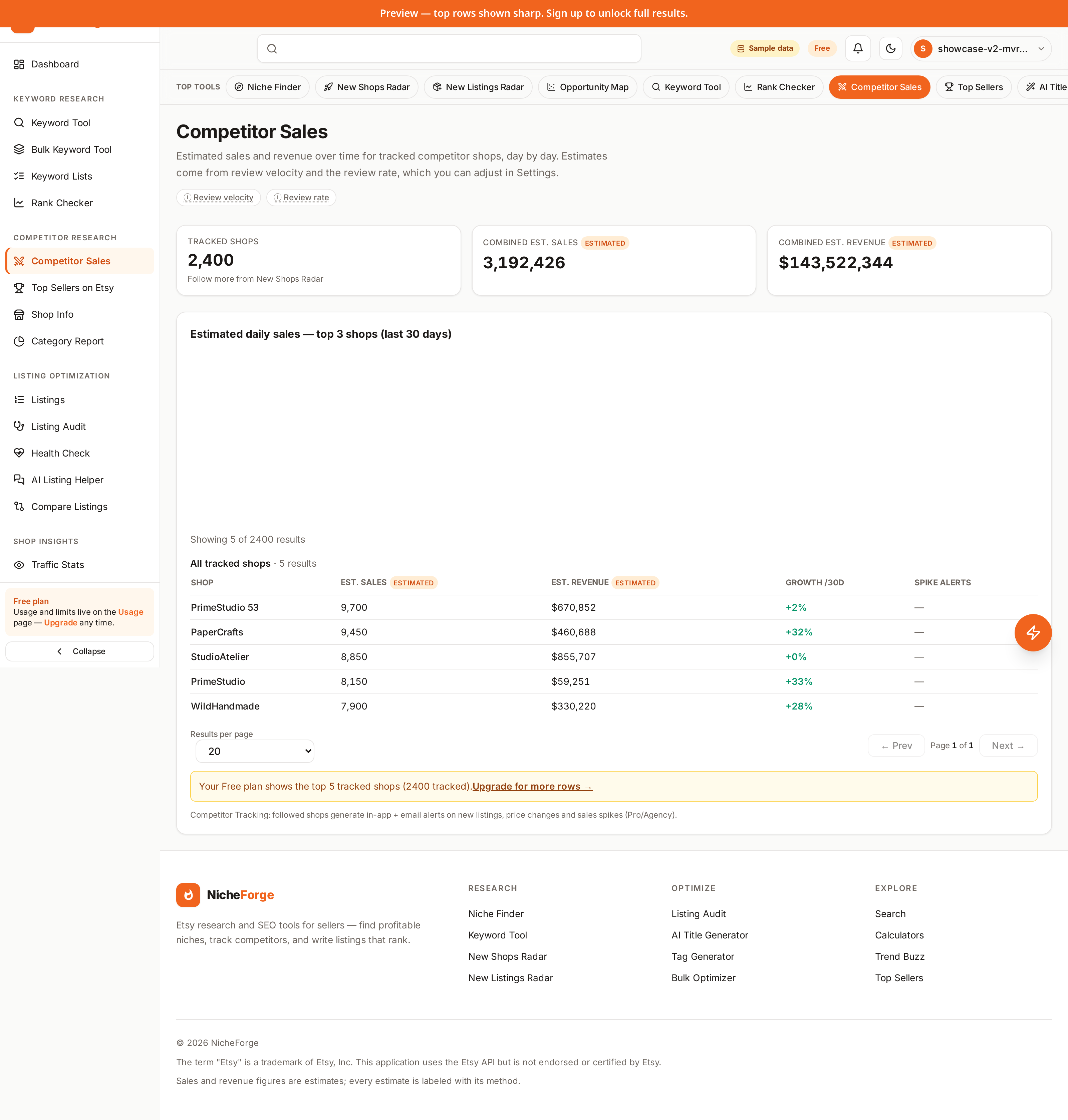
Your competitors' tags and titles are a public record of the language buyers already reward. A keyword gap check reads that record against your own listings and finds the phrases competitors rank for that you do not. Done well, it hands you a short list of proven buyer phrases to consider. Done poorly, it turns into copying, which helps neither your shop nor your ranking. This guide shows the honest version.
The Tag Report shows which tags appear most across a niche, and the gap check extends that idea to a single competitor: which of its phrases are missing from your listings, and which of those deserve a place in yours? The steps below work for any shop you can study openly on Etsy.
What a keyword gap is
A keyword gap is a phrase that brings buyers to a competitor's listing but does not appear in yours. It is not a secret. It is visible in the competitor's title, tags, and description language, and in the search terms that surface its listings. Finding gaps matters because your listings cannot rank for phrases they do not contain, and a missing phrase can be the whole reason a buyer never finds you.
A gap is a candidate, not a command. Some gaps exist for good reasons: the phrase describes a product you do not sell, a style you do not offer, or an audience you do not serve. The check finds candidates. Your judgment decides which ones belong in your shop, and the later sections explain how.
Pick the right competitor
Pick a shop that serves the same buyer you do, at a similar level. A shop selling the same kind of product to the same kind of buyer is a useful mirror. The market leader can also teach you, but its phrases may reflect an audience and a history you do not yet have, so weigh its gaps more carefully. A shop in an adjacent niche can reveal phrases that migrate, but start with the closest mirror for your first check.
Pick one competitor for your first check, not ten. One shop gives you a list you can actually judge. Ten shops give you a spreadsheet you will never finish. You can repeat the check against a second shop later, once the first list is worked through and you know which kinds of gaps turned out to be valuable.
Collect their language
Open the competitor's strongest listings and note the phrases they repeat: the opening words of titles, the tags that recur across listings, and the phrases in descriptions that describe materials, occasions, recipients, and styles. Note which phrases appear in many listings and which appear in only one or two. Repetition across listings is a signal that the phrase is doing work.
Also note the phrases in reviews. Reviewers describe what they bought in their own words, and those words often match what future buyers will type. A phrase that appears in both the shop's listings and its reviews has passed two tests: the seller chose it, and buyers echoed it. Those phrases go to the top of your candidate list.
Compare with your own listings
Lay the two languages side by side. For each competitor phrase, ask whether it appears in your titles, your tags, or your descriptions. Mark each phrase in one of three groups: already covered, missing and relevant, or missing and irrelevant. The middle group is your gap list. Keep it short: ten to twenty phrases is plenty for one round. A gap list of a hundred phrases is a list you will never use.
Check the tag picture for the whole niche as well as the single shop. The Tag Report shows which tags appear most across the niche, which helps you see whether a gap phrase is specific to one competitor or common across many sellers. A phrase common across the niche and missing from your shop is usually the more urgent gap.
Judge before you adopt
Judge every gap phrase before it enters a listing. First, relevance: does it describe what you actually sell? A phrase that brings the wrong buyers hurts you, because clicks that do not convert tell search your listing was a poor match. Second, intent: does the phrase signal a buyer ready to purchase, or a browser collecting ideas? Third, fit: can you use the phrase honestly, in a title or tag that still reads naturally?
Never copy a competitor's listing. Copying its title, its photos, or its description gives buyers no reason to choose you over the original, and search no reason to rank the copy above it. Learn the language, then write your own listing in your own voice around the phrases that genuinely fit. The gap check is research, not duplication, and the distinction matters for your shop and your standing.
Apply the gap to your next listing
Start with the next listing you publish or revise, not with a wholesale rewrite of your shop. Place the strongest gap phrases where search can read them: the primary phrase near the start of the title if it fits naturally, variations in tags, and the main keyword used naturally in the description's opening lines. Change one listing at a time, and note what you changed and when.
Then watch. Which gap phrases bring views? Which bring favorites? Which bring sales? A phrase that brings views but no favorites may be mismatched to your product or photos. A phrase that brings favorites but no sales may need a price or description fix. Keep the phrases that earn their place, drop the ones that do not, and repeat the check against another competitor once the first round is settled.
Frequently asked questions
Is a keyword gap check copying?
No, when it is done honestly. Studying the phrases a competitor uses in public titles and tags is research. Copying its title, photos, or description word for word is duplication, and it gives buyers no reason to choose you. Learn the language, then write your own listing in your own voice.
How many competitors should I check?
One, for your first check. One shop gives you a gap list you can actually judge and act on. Once that list is worked through, repeat the check against a second shop, and compare which gaps turned out to be valuable before you expand further.
What if a gap keyword does not fit my product?
Leave it out. A phrase that describes something you do not sell brings clicks that do not convert, which tells search your listing was a poor match. A gap list is a list of candidates, not commands, and the phrases you reject are as much a part of good judgment as the ones you adopt.
How often should I repeat a gap check?
Every few months, or when you notice a competitor's listings changing. Buyer language moves slowly, and your own listings change as you revise them. A quarterly check keeps your language current without turning research into a full time job.
Conclusion
A keyword gap check is a simple discipline: study one competitor's language, compare it with your own, judge each gap for relevance and intent, and adopt only what fits, in your own words. Repeat it regularly, and your listings will gradually speak more of the language buyers already use, without ever copying the shop you learned it from. That is how gaps close and shops grow: not by imitation, but by listening.
Try it free: check the Tag Report and find your first keyword gap today.
Get started free →The term "Etsy" is a trademark of Etsy, Inc. This application uses the Etsy API but is not endorsed or certified by Etsy.
More from News
- How to Find a Profitable Etsy Niche: A Beginner's Guide (Niche Research · 7 min)
- Etsy Keyword Research: Choosing Keywords That Match Buyers (Keyword Research · 6 min)
- Reading Demand vs Competition for an Etsy Niche (Niche Research · 6 min)
- Etsy Listing SEO Checklist: Titles, Tags, Descriptions (Listing SEO · 6 min)
- Spotting New Etsy Shops and Trends Early (Trends · 7 min)
- How to Use the Etsy New Shops Radar to Find Fresh Competition Early (Trends · 6 min)
- New Listings Radar: First Created Date Versus Renewal Date, and Why It Matters (Trends · 6 min)
- How to Read a Niche Score: Demand, Competition, and Opportunity Explained (Niche Research · 6 min)
- Etsy Keyword Research Without Official Search Volume: What Live Listings Can and Cannot Tell You (Keyword Research · 6 min)